ProgrammingCall for SubmissionsNewsBecome a MemberMerchandise
Rentals + Services
About VIVO
Archive
Video Out Distribution
Donate

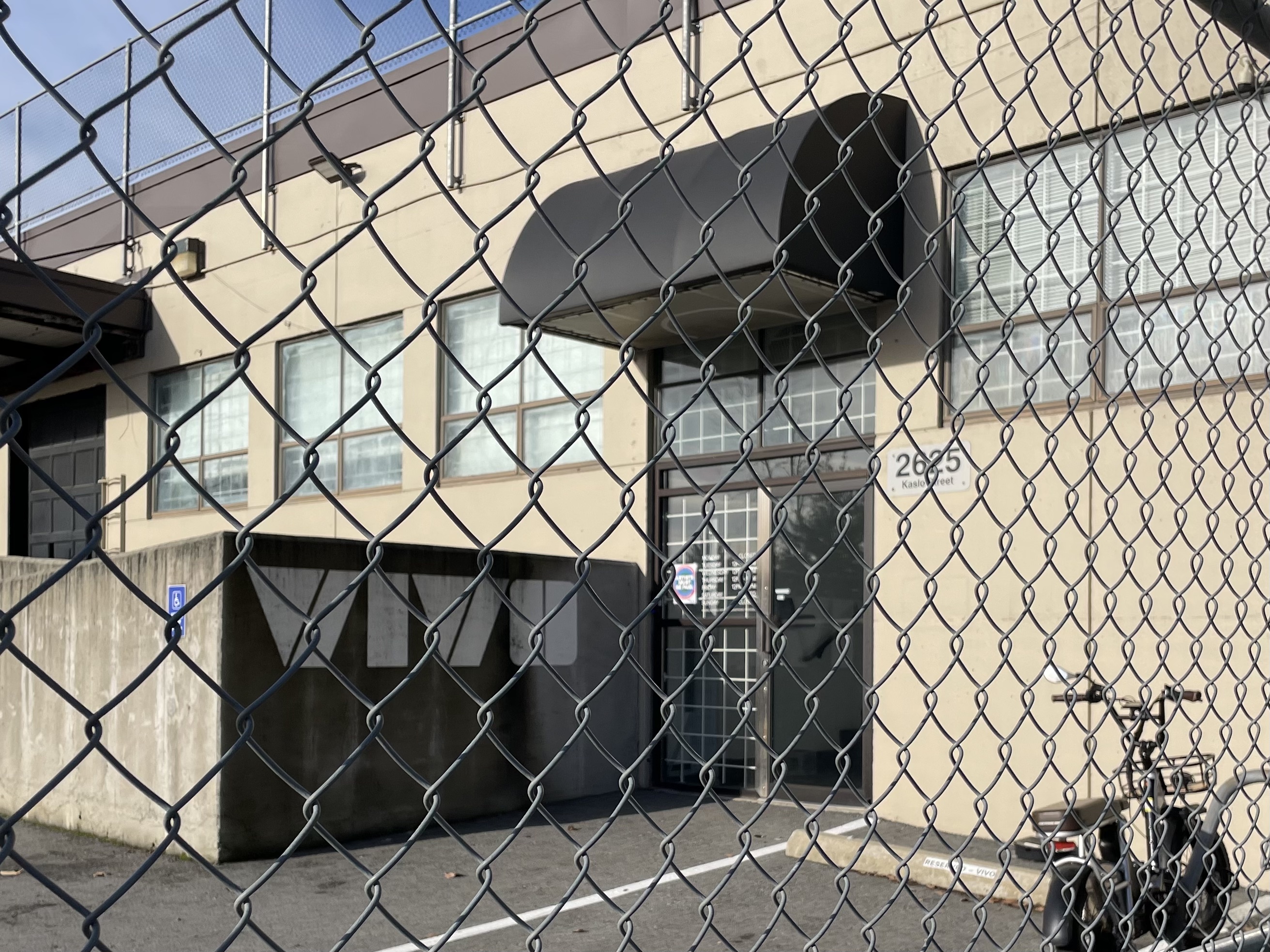
VIVO will be closed for the winter break from December 16, 2025, to January 2, 2026. As we wrap up a year full of incredible moments and real struggles, we're taking a brief pause to recharge before diving into 2026 with fresh energy and ambitious plans. We'll be back in the office on January 6th, 2026.
Before the year ends, we wanted to take a moment to send another HUGE thank you to everyone who responded to our rental crisis this year. The amount of support we received was staggering, and together we raised almost $24,000 to help keep VIVO's doors open. If you love VIVO and want to support us before the year ends, there's still time to donate. All contributions go directly to operations, artist fees, programming, and keeping our space accessible.
We have more responses from artists we’ve worked with and supported over the years, all of which about VIVO’s impact on their artistic careers. They come from a wide range of creative backgrounds and generations, and have graciously responded to our questions below. We are moved by their stories, and their thoughtful responses remind us why what we do matters.
VIVO Media Arts has been instrumental in supporting my artistic development from the start. They provided space, equipment, and production support for early performances, which helped establish my practice and connect with the local community. Over the years, VIVO has continued to offer vital resources—technical equipment, venue access, exhibition support, and distribution services—that made ambitious projects possible. They also offered administrative support, including letters for grant applications and multi-year project planning.
The Crista Dahl Media Library & Archive (CDMLA), which holds nearly 8,000 media works documenting over 60 years of video art and independent production, is an incredibly important resource, that includes important works like those by the Chilean art collective CADA (Colectivo de Acciones de Arte), founded under the Pinochet dictatorship by Diamela Eltit, Nelly Richard, and Lotty Rosenfeld. As a Chilean I can’t stretch enough the importance of these works and how devastating it would be to lose them.
VIVO is a foundational part of Vancouver’s artist-run culture, and it’s our shared responsibility to continue nurturing it, so future generations of artists can feel supported, safe, and free to express themselves.
As a practicing media-artist and educator, I continue to be deeply grateful for the integral role VIVO Media Arts Centre has played in my artistic and professional development. From combing through Video Out archives (as a student in the early 2000's) to accessing space and equipment for numerous projects, my practice, like that of many artists, has been founded upon the creative experimentation enabled through the care and support of local artist-run organizations like VIVO. Over the years, I have had the honour to launch performance projects, exhibit artwork and distribute video works through VIVO's robust outreach channels. The resources and technical knowledge of VIVO's generous team have directly contributed to the level of technical and creative ambition in my work, resulting in complex multi-channel installations, interdisciplinary live performances and community-driven media projects. At a time when critical investigations into technology and its artistic potential hold deep significance, VIVO's role in our local and expanded cultural ecology must be protected.
VIVO Media Arts Centre has been a long-time supporter of my work and artistic practice, especially for research projects that involve integrating and experimenting with different technologies in dance. Recently, I had the opportunity to research and present a new laser movement installation, ARRAY, at VIVO Media Arts Centre through a 2-week technical residency, performance, and exhibition.
Creating and developing my artistic practice at VIVO has been a transformative experience, allowing me to create unique approaches and freely express my artistic vision while exploring all possibilities during the process. Through close collaboration with the VIVO team, comprised of artists and like-minded individuals, I received support in every phase of the creation process, specifically around all components of production.
VIVO Media Arts Centre plays a crucial role as an organization, particularly in so-called Vancouver, filling a gap supporting artists at various stages of their practice who approach their work from a process and research-driven perspective. VIVO fosters freedom of expression and flexibility, enabling diverse creations to emerge across different disciplines, often leading artists to outcomes that extend beyond their initial imagination.
In 2024, I was a participant in the Response program from The Polygon gallery, and had a somewhat ambitious concept that I wanted to create. VIVO Media Arts Centre offered me a Micro-Residency for a full day, with free access to space to film, equipment and assistance. This micro-residency had a huge impact on my practice, as I was given space and support to realize my performance for video project—it was also my first time working in film, so having such great support early working in a medium gave me confidence to continue exploring lens-based work. I could not have made my piece without the support they gave me, and I know my story is not the only one. Since my residency, VIVO has partnered with The Polygon and the Response program to support future emerging Indigenous artists going through the workshops to help them in creating their new film works. As an organization, VIVO is important because they make a medium that is inaccessible to many easy to access, and support emerging and mid-career artists. They also have a long history of presenting Indigenous and Queer artists—many of my peers and colleagues have had shows in their space, presenting experimental works. I can’t imagine Vancouver without VIVO in it.
It was a true pleasure to work with VIVO Media Arts Centre on the Shiki & Kū exhibition. As the lead artist presenting technically complex immersive audio-visual installations, I greatly appreciated VIVO’s dedication, creativity, and expertise. Their team provided unwavering support through every stage of the project—from technical coordination and promotion to welcoming audiences from diverse communities. Their collaborative spirit and positive approach to problem-solving made the production process both smooth and inspiring. The exhibition’s success was a direct result of VIVO’s commitment to artists and their exceptional ability to realize ambitious, multidisciplinary projects.
VIVO has been an invaluable presence in Vancouver’s arts community. Since forming as The Automatic Message in 2006, we’ve performed at VIVO many times across various events and festivals, rented the venue to produce our own shows, and used its facilities for filming and workshops. From the very beginning, VIVO has been a tremendous source of support for our creative practice.
For our 65-minute, four-channel immersive film installation EMDR, VIVO provided affordable access to studio space for filming as well as technical assistance. When we confirmed our exhibition at VIVO, they generously offered a room for two days of testing our multi-channel audio-visual setup. We were supported with an artist fee, all necessary equipment, a dedicated technician, and a full two weeks to install the work. In addition, VIVO hosted an opening reception and artist talk—both fully staffed—and promoted the exhibition across their website, social media, newsletter, and press network. They also provided professional documentation of the opening night and the installation itself. EMDR was presented at VIVO for eight days.
Thanks to this incredible level of support, we were able to connect with a wide audience. The opening reception was well attended. Beyond the exhibition, VIVO has continued to champion our project—collaborating with us on gallery proposals and offering ongoing mentorship as we advance our artistic careers.
VIVO remains an essential institution in Vancouver’s cultural landscape. With its longstanding commitment to experimental and media-based practices, it stands as one of the few organizations in the city that provides comprehensive support for new media artists—from affordable rentals and creative development spaces to public presentation opportunities—without compromising artistic integrity or independence.
We love VIVO!
I have been a VIVO supporter and user since my arrival in Canada in 2017, and I have worked with VIVO in various capacities over the years. While VIVO is undeniably a cornerstone of Vancouver’s artistic and academic community, its impact extends far beyond the city, reverberating across Canada and beyond.
As a Toronto-based media historian working with audiovisual media archives, especially with works by queer, trans, feminist, and BIPOC communities, VIVO has been instrumental to my intellectual journey. Much of my research examines the history of community cable programming in Canada and heavily relies on the Crista Dahl Media Library & Archive (CDMLA). The CDMLA holds precious histories of cable access unavailable elsewhere: from the early written records documenting debates around community access television, to the hundreds of videotapes of shows that would have otherwise been lost, such as Gayblevision, an invaluable LGBTQ2+ program that aired on Vancouver’s Channel 10 from 1980 to 1986. VIVO has gone above and beyond to preserve these materials and make them accessible to the community, digitizing countless hours of footage and sharing them online, free of charge. In an era where audiovisual archives are increasingly at risk of disappearing, VIVO’s preservation work is nothing short of vital.
Furthermore, being able to access these community cable materials alongside the extensive archives and documents pertaining to individual media artists and to VIVO’s own history means that the space holds together histories that might otherwise remain scattered, ensuring that visitors and users have a holistic understanding of Vancouver and Canada’s media landscape, and that VIVO’s artistic and activist legacies continue to inform future generations of artists in the city.
As an educator, I have also collaborated with VIVO, artists, and curators to produce open-access digital educational guides through the Archive/Counter-Archive project. These resources bring significant works from VIVO’s collection into classrooms nationwide, enabling students to engage with key moments in Canada’s media and art history which are often absent from formal curricula. Among them are debates around feminism and censorship in 1980s Vancouver, the influence of Latin American video on Canada’s video art’s scene, and the groundbreaking In Visible Colours festival of 1989.
The support and sense of community I’ve experienced through my collaborations with VIVO have been extraordinary. Visiting the space always feels like a warm hug, and I make a point of visiting the organization, checking out the exhibitions, and sitting down with the staff whenever I’m in Vancouver. Their knowledge, care, and dedication to their work are unmatched.
Vancouver needs VIVO!
Soledad Fátima Muñoz is an interdisciplinary artist and researcher born in Canada and raised in Rancagua, Chile. Her work seeks to highlight the historical materiality of textiles and their role in shaping our collective memory. Through her large-scale weavings, sound installations, and audiovisual projects, she hopes to create instances that contribute to the construction of a more equitable society and the production of new archives of resistance.
In addition to her material works, she utilizes different forms of cultural production as part of her practice. In 2014, she started Género, a record label focused on the distribution of women's work in the sound field. Then in 2017, she co-founded CURRENT Symposium, which is an ongoing interdisciplinary multi-day music and electronic art symposium featuring free events, panels, exhibitions, and workshops. More recently, in 2019, she co-created "La Parte de Atrás de la Arpillera'' a collection of interviews with Chilean arpilleristas and textile workers, whose experiences tell the history of resistance in this country.
Muñoz is currently working on her project Woven Memory / Memoria Entretejida, a series of site-specific installations and exhibitions planned around large-scale copper wire weavings, which commemorate the lives of those still missing and murdered during Augusto Pinochet's dictatorship in Chile.
Soledad received a Master of Fine Arts from the School of the Art Institute of Chicago, graduated from Emily Carr University of Art + Design, has a diploma in Textile Arts from Capilano University and studied Film at the ARCIS University of Santiago in Chile. She is the recipient of several awards, including the City of Vancouver Emerging Artist Award, the New Artists Society Merit Scholarship from the School of the Art Institute of Chicago, the Emily Carr University President's Award, and the Textile Society of America's Student and New Professional Award.
Photo by Kati Jenson
Elizabeth Milton is a performance and media artist who lives as an uninvited guest on the unceded territories of the xwməθkwəy̓əm (Musqueam), Skwxwú7mesh (Squamish) and Səl̓ílwətaʔ (Tsleil-Waututh) First Nations in Vancouver, Canada. Her video and photo-based works utilize absurdist character-play and camp materiality to explore identity and affect. Involving a range of participants, from family members to opera singers, her interdisciplinary and collaborative works aim to critically investigate the visual language and power structures of amateur spectacle. Through hyperbolic expressivity, comedic excess and processes of endurance, Milton examines the performative potential of maximalist femininity, novelty store glamour and the garish refuse of commercial culture.
Her work has been exhibited and performed in Canada, The United States and Europe at the Vancouver Art Gallery, Artspeak, Access Gallery, the Grunt Gallery, VIVO Media Arts Centre, the Western Front (Vancouver); the Surrey Art Gallery; the Nanaimo Art Gallery; Gallery TPW, Nuit Blanche (Toronto); Platform Centre for Photographic and Digital Arts (Winnipeg); Neutral Ground (Regina); Deconstrukt Projects (Brooklyn), Dynasty Handbag’s Weirdo Night (Los Angeles) and Altes Finanzamt (Berlin).
Milton holds an MFA in Studio Art from the University of British Columbia and a BFA in Visual Art from Simon Fraser University. She is a faculty member in the Department of Fine Arts at Langara College where she instructs studio courses in Media and Performance.
Eric Cheung is a second-generation Chinese-Canadian inter-disciplinary street dance artist and choreographer based in so-called Vancouver, on the unceded territories of the xwməθkwəy̓əm, Skwxwú7mesh and Səl̓ílwətaʔ/Selilwitulh Nations. Eric has cultivated a singular approach to generating movement and choreography that is recognized nationally and internationally, with his specialization in the Popping style while incorporating outside influences and other dance styles in his practice.
Eric has been a company member of Ouro Collective since 2018, a street dance contemporary company, partaking in the creation process of HAKO, SOTTO51, Fire06, 7y98D (Theatre / Film) in collaboration with RubberLegZ, Ouro Excerpts and Ouroboros.
Individually, Eric explores different mediums to expand the boundaries of street dance further in various artistic forms of film, theatre, digital new media, interactive experiences and art installations. Select works include E_GO, I(n)finite, Re:1974, iye, Diverge, Flux, Liminal, Null, and Flux.
Most notably known for the international acclaim of the short film E_GO commission by FORM in 2018, where Eric has been awarded and featured on numerous online art platforms and festivals, such as Nowness, Booooooom, Vimeo Staff Pick, screened at international film festivals such as Aesthetica Festival, San Francisco Dance Film Festival, FORM Prague Film Festival, and Telus Spark Optik TV. Later, he received the Best Experimental Short at Cift 2023 for his recent film “I(n)finite which was featured on Nowness Asia.
Additionally, Eric has presented solo theatre works and exhibited at Place Des Arts, Pact Zollervin, Phi Centre, La Nuit Blanche, Music Conservatory of Montreal, VIVO, Polygon Gallery, Vancouver Art Gallery, SFU, and Festive Acces Asie. Eric has collaborated with Acronym, ASUS ROG, CBC Arts, Spencer Badu, Company 605, Spy Films, Modus Operandi, and RubberLegZ.
Photo by: Sebastian Palencia
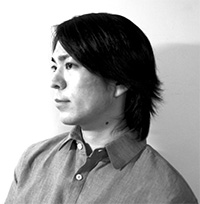
Yota Kobayashi is a soundscape artist specializing in the creation of immersive and interactive soundscapes for audio-visual installations through an integrated practice of sound production, composition, and software development. He holds a Doctor of Musical Arts degree in composition from the University of British Columbia. His artistic research and creative work on human-computer interaction for experiential artwork have been funded by the Social Sciences and Humanities Research Council of Canada (SSHRC), UBC ICICS, the Canada Council for the Arts, Creative BC, the British Columbia Arts Council, and the National Association of Japanese Canadians. His works have been presented internationally at festivals, conferences, and exhibitions. Notable awards include First Prize at Musica Nova (Czech Republic) and First Prize at the Concours Internazionale Luigi Russolo (Italy).
Vancouver, Canada-based Trevor Jacobson and Tanya Goehring are The Automatic Message. They are an artist duo working in the fields of expanded and live cinema, as well as photography, new media and electronic music production. Since forming The Automatic Message in 2006, Trevor and Tanya have been producing dark, off-kilter techno and supporting it with their own visual interpretations, which, in line with their music, creates a tremendous sense of unease and tension. They create surreal, emotional and immersive experiences by blending cinematic footage and experimental electronic music. Much of their work centers around themes of memory and the displacement thereof. They have been performing their work and collaborating with other artists across Canada, in the USA, Germany and Denmark.